WWW.MINDPLAYERS.WORLD
MIND Side
The inward view of the mind, mind's playful development, self-understanding, true nature realization.
Mind 1
Introduction
Mindplayers play their mind like a beautiful instrument.

What is mindplaying?
Mindplayers keep their mind or outside triggers from playing them, from pushing them around with thoughts and emotions.
Mindplayers are curious, trust their intuition and give themselves permission for even irritating experiences.
Most people do not dare to play and will be played forever. And yet it is simple to play regularly in ordinary daily situations.
Mindplayers Toy Box
For a structured mindplaying approach, play the "50 Plays for Mindplayers" regularly.
Download the
50 Plays for Mindplayers Do-it-yourself Booklet (~10Mb)
or read it together with illustrated comments on facebook.
For AI chat assistant upload use the
50 Plays markdown version.
You prefer a playful, surprising and fluid approach? Find the topic related video picker
selecting from 1,000 videos for your immedeate playing here and now.
Only very experienced mindplayers (10+ years of regular playing), especially when stuck in the void,
should use the "21 Advanced Plays" (link at the end of Chapter 3).
Most Important resource: 50 Plays for Mindplayers Do-it-yourself Booklet
(Don't study, don't save, don't understand, do!) Download the illustrated 100 page booklet (~10 MB)
Mind 2
Structure
Mindplaying develops in a specific structure of four stages. You ideally proceed to the next stage after some experience with earlier stages. But you repeat plays from earlier stages regularly to deepen the mindplaying experience.

Explore Plays
Explore plays create the foundation for more challenging plays. They strengthen attention management and detailed observation of the mind objects and activities. And they make playfulness, toddler curiosity or beginner's mind more familiar and present.
Glimpse Plays
Glimpse plays are proven approaches to get a first glimpse of your true nature, of who you really are.
Early glimpses are usually impressive, sometimes blissful, sometimes strange and irritating.
These experiences make the following stages easier to realize and handle.
- How to play Glimpse Plays
- Focus Light Saber Style
- Open embracing Awareness
- Trash your stories
- Fire up a Campfire
- Point a finger at yourself
- Make it rain Goodness
- Find the Recognizer
- Absorb an Archetype
- Be Not-Knowing
- Sink into a sharp Ping
- Dive into the Ground
- Become a Blaster-Master
- Just sit doing nothing
- Play Space Catapult
Identify and Liberate Plays
Identify plays help to find all aspects or parts of your self, which are ready to be liberated.
Glimpses experienced by one part of your self often get interrupted by other parts,
which are not ready for that experience or want to protect your self from harm.
Liberating a part requires to identify it and then pass with it through a specific sequence of liberate plays.
The approach looks simple and playful on the surface while acting rigorous and transformative at its deeper levels.
Identify Plays:
- How to Play Identify and Liberate Plays
- Chat with your Body-Parts
- Meet your Family of Parts
- Invite unknown parts
- Attend your Oddities
- Study Admiration and Rejection
- Bring the Subtle back home
- Inquire Feast Resistance
Liberate Plays (sequential):
- Warmly welcome the part
- Walk in its “shoes”
- Express the Real Need
- Prepare a Part Feast
- Feed until overflowing
- Feel full and satisfied
- Call all parts on stage
- Let Real Action begin
- Gift your special Goodness
- Let the part Glimpse Play
Unite Plays
Unite plays help to realize your all-embracing oneness with the pure emptiness and lovely
richness of yourself and the world. The experiences is similar to glimpses as long as most parts
are not yet liberated and immedeately interfering.
With every newly liberated parts, the range of aspects of the self and the world, which can be experienced
as empty of separate independent nature and as one with everything else, becomes larger.
Mind 3
Situations
Mindplayers play everywhere and always, not only, when sitting on a meditation cushion. Mindplayers liberate all aspects of themselves, all parts of their Self, not only the "Seeking-Self". Mindplayers play specific plays to clear obstacles, when they get stuck or see no progress.

Ordinary daily life
Mindplayers play everywhere and always. They play on a walk, hike, when cycling, riding, in the car, train or bus, at rest, when waiting or at spare times. They play while doing home-work, work-out, hand-craft, cooking, kid-care and other repetitive activities. They play at school, in meetings, in the office, when their attention is not fully required. Advanced players even play appropriate plays while communicating, reading, texting and with any other activity.

All Aspects
Mindplayers liberate all aspects of themselves.
The Self is not a homogeneous entity, but a "family" of parts, aspects or sub-selves.
Parts have been created to flexibly fill roles, quickly adapt to various challenges,
internalize reference persons or deal with trauma and extreme experiences.
Parts can be known, regularly present and nicely integrated to a homogeneous-looking self.
Some parts are specialists only appearing on their specific trigger or challenge.
Other parts are unknown, repressed, locked up in the "Shadow", "Exile" or "Basement" and acting out covertly.
Parts can be on the current level of personal development but some of them are still younger, even on toddler or baby level.
Liberating the "Seeking Self", the "Spiritual Self" or the "Meditator Self" does not include the others.
They can and will actively interrupt or end realizations, question and reinterpret the experience or even prevent
recognizing any realization in the first place.
But all parts have a positive intention, valuable insights and love to be liberated even if their observable behavior
seems to indicate the opposite.
They always intend to do good but depending on their developmental level sometimes act immature and painful.
But sometimes the other more "smart" and "mature" parts just don't get it!

Stuck at beginning
Starting with meditation or mindfulness can get people stuck. They try it a few times, judge the outcome by the expected increase of bliss, happiness and personal improvements and drop it. Any practice needs repetition, time, and endurance. The trick is making it a personal habit. Decide about your regular time, place, and rituals. Create a new MINDPLAYER identity, for yourself, which enjoys practicing and is very curious about the mind. Identify, what triggers you away from your new habit. The Explore Plays 1-4 focus on this. The other Explore Plays focus on strengthening your attention control and concentration power. Play these regularly, especially as a beginner.

Stuck at Self-Improvement
Your ability to control your attention and your concentration power has significantly improved. But you have a sense, that there is more, that this is just a start and you want to make a step forward into this uncharted territory. 50 Plays are based on the widely but not always accepted assumption, that every person has everything needed to realize anytime, what meditation is all about. They do not need to develop or get anything by practicing, everything is always there. People even realize this regularly but are usually not aware of realizing it. The Glimpse Plays offer a variety of ways to realize first glimpses of what this is all about. The first glimpses are usually short and irritating. They can feel like very strange, boringly ordinary, strikingly alien, or totally uninteresting. But with repeatedly refocusing awareness on these glimpses, the spaciousness and relaxing character becomes more apparent. As personalities are different, everybody will find different Glimpse Plays appealing. Try them out and repeat those, which work for you and feel good. Later try the other ones again. Kind of looking at the same realization from different perspectives helps clarify and stabilizing it. Glimpses come and go as they like, just enjoy and investigate them, until they disappear again.

Stuck in the Subtle World
Many people meditate to engage with the Subtle World. The Subtle World is a huge range of phenomena, which some people consider real and others imaginary. You can assume, that all subtle phenomena are objects of the mind (like all real phenomena too). Subtle phenomena allow us to project desires, hopes, fears or anger away from ourself or people around us to persons or objects in the Subtle World. Examples of Subtle World objects are Angles, Dragons, Ghosts, Buddhas, Fairies, Demons, Gods, Devils, Subtle Energies, Non-Natural Forces, Chakras, Kundalini and many others. Subtle World phenomena can have a good impact, there is nothing wrong working with them and even 50 Plays use some subtle phenomena. Engaging with this world can be rewarding and beautiful but also threatening and limiting. To step forward look at all these phenomena as objects in your mind, as phenomena your mind created with best intentions. Play the Glimpse Plays and include all subtle phenomena you believe in as objects in your mind. When playing part liberation, the Identify Play 6 is especially aiming at parts of yourself, which create and deal with subtle phenomena. Find and liberate all of them, like you liberate all parts, which deal with phenomena of the so-called Real World.

Stuck at spontaneous Glimpses
You regularly experience spontaneous glimpses, but they do not have significant impact on your life, thinking or your perceiving the world and yourself. You wish them to be clearer and more persisting, but your practice alone seems not to work so far. Most of the significant parts of your Self must be liberated to proceed from spontaneous glimpses to more persisting realizations. A continuous focus on part identification and liberation is required now. The effects are twofold: Firstly, all liberated parts support and enjoy realizations and the time, while it stays. So, they have no tendency to interfere, stop, redirect or reinterpret it. Secondly, they all add a dimension or aspect to the realization, so the realizations become richer, wider, and more complete.

Stuck in the Void
An intense, lasting or regularly recurring realization of emptiness, of absence of subject and object can be experienced as pure bliss. In some cases it can also be experienced as a deep, dark void of nothingness. In the first case, you can get stuck there, because it is so blissful. In case it is threatening, you stop meditating to not fall into it again. The next step requires recognizing all dimensions not only the emptiness, to embrace the complete paradox of each phenomenon = all phenomena = no phenomenon. The Emptiness must be integrated with the Oneness with all phenomena. This can require liberating some deeply hidden parts being created to deal with old, very traumatic experiences or with negative aspects of you, which you consider not acceptable and impossible to be part of yourself. The Unite Plays are helping to fully be this paradox, to integrate all dimensions and aspects and to see it becoming richer, wider, and more complete. And especially when deeply stuck or to prepare the mind for non-dual suchness to emerge, the 21 Advanced Plays are highly recommended.
Important advanced resource: 21 Advanced Plays for very experienced Mindplayers
(Don't study, don't save, don't understand, do!) Download the widescreen sheets (PDF, 1.5 MB)
Download the vertical phone sheets (PDF, 7 MB) Download the text-only markdown file (45 KB) for AI usage
Mind 4
Videos, Videos, Videos
You want random plays ready to go? You want variety, fun and playfulness?
Just choose from 1,000 one minute short videos on
Youtube Shorts
, ordered like the topics below Youtube Playlists
or on TikTok
(identical) and practice them regularly at your convenience.
Or pick a topic here, tap the related button and get randomly selected videos playing here and now.

Overview
Why mindplaying at all? These few videos describe the approach and general intention of mindplaying.
Watch a random "Overview" short one minute video
Attention, Triggers, Mindfulness
You want to stay here and now? Use these little plays to train and strengthen your attention management and recognize, what triggers you.
Watch a random "Attention, Triggers, Mindfulness" short one minute video
Mind's Functioning
You want to study your mind? Observe and understand the functioning of your mind with these mindplays.
Watch a random "Mind's Functioning" short one minute video
Loving Kindness
You care for love and kindness for others and for yourself? Play these short plays and enjoy direct results..
Watch a random "Loving Kindness" short one minute video
Embodiment, Breathwork
You want your body to relax and thus also relax your mind? Play these little body and breath hacks and feel direct results. For lasting effects just play regularly.
Watch a random "Embodiment, Breathwork" short one minute video
Parts of your Self
You want to uncover parts of yourself? These plays help to identify your visible and hidden parts, calm and release them and reduce stress and wasted energy for suppressing, hiding and locking them away.
Watch a random "Parts of your Self" short one minute video
Feeding your Demons
You have a demon in your life? You know, what demon! You might see it outside or in another person, but it is really sitting in your mind. But it can be calmed, liberated and even befriended.
Watch a random "Feeding your Demons" short one minute video
Peace of Mind
You desire peace of mind? Find over a hundred small mindplays to achieve immedeate peace, empty your mind and enjoy relaxation. Lasting change as always requires continuous playing.
Watch a random "Peace of Mind" short one minute video
Click Bottom Bar for Footnote (in progress) and Impressum ▼
WWW.MINDPLAYERS.WORLD
WORLD Side
The outward view of the world, current metacrisis, human and earth development, era of artificial intelligence.
World 1
Introduction
Little Green Alien talks about the future of humanity in the era of very intelligent artificial intelligence.

Little Green Alien and its Intelligent Spaceship
Little Green Alien is a visitor coming from somewhere in space. It flies in a spaceship, which is a very intelligent artificial intelligence (AI). Both are connected mind to mind through this small red pompoms. They have lived together since alien was a very young kid. They both love to visit earth and study nature. Little Green Alien has even decided to have a green, photosynthetic fur to nicely blend into all natural, green environments. Bodyforms can be individually bioengineered on its planet to individual needs and preferences. Earth is the planet Alien and Spaceship have selected for their studies and Billie is a human, they met at their first visit, meet regularly and like to have conversations with.
Future of Earth, Humanity and AI
The global situation on earth is confusing, seemingly robust conditions are getting increasingly brittle. Climate is changing, biodiversity is vanishing, global political order disintegrates and ordinary people are feeling confused, insecure and concerned about the future. In addition AI and related infrastructure is developing in unprecedented speed and the trajectory is nearly impossible to predict.
"The Metacrisis is not many crises happening at once—it is the pattern behind them all. It's a crisis of our collective capacity to make sense of the world, coordinate our actions, and care for life. ... It is a civilizational breakdown in coordination (global governance), ecological breakdown (climate, biodiversity), and technological risk (unregulated AI, biotech, cyber weapons)". (Schmachtenberger, as cited in Umoja Greenlands, 2024)
If you are convinced, that one of the following solutions, will solve the crisis, this whole story is not for you.
-
Techno-Optimists solutions:
- Decoupled Green Growth, continue exponential GDP growth with reduced absolute resource consumption.
- AI-Managed Governance, a benevolent AI governance optimizes resource distribution and climate policy.
- Speculative Geoengineering, using solar radiation management (spray aerosols?) to reduce warming.
- Global Earth System Governance, a powerful global governance body superseding national sovereignty.
- Post-Scarcity Energy, super cheap (fusion?) energy generation making resource extraction obsolete.
- Consciousness Shift, global, mindful shift of human values from ego-centric to eco-centric.
- Deliberate Democracy, replacing partisan politics with randomly selected educated citizen assemblies making binding recommendations.
- Circular Economics, establishing a healthy no-waste steady-state economy with social floor and ecological ceilings.
- Wisdom-Based Education, focus on sense-making and epistemic humility to help the next generation navigate the AI-driven information landscape.
Utopian Dreamer solutions:
Grounded Systematic Solutions:
If you would love to learn, that one of those works fine, but you doubt it, consider listening to Little Green Alien. It might offer a third story besides civilizational collapse and a totalitarian oppressive global order.
WORLD 2
Earlier Alien Visits
Little Green Alien visited earth earlier,
when it was quite young and met the young Billie for the first time.
Find all Little Green Alien videos from season 1 to 4 in the
Little Green Alien Youtube Playlist,
all videos season 1 to 4 and all articles season 5 to 7 in the
Little Green Alien Substack channel,
all illustrated transcripts season 1 to 4 in the
Little Green Alien Season 1 to 4 combined document.
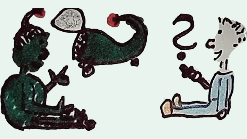
Season 1
Follow Billie´s earliest encounters with Little Green
Alien and its intelligent spaceship. Follow their early conversations about alien's childhood memories, its early
communications with its intelligent spaceship and its early mindplaying experiences (from mid 2024).
Find season 1 transcripts in markdown format for AI upload in the
LGA Season 1 transcripts markdown file.
Watch season 1 videos on Youtube or Substack or read the authentic transcripts here:
- 1.1 Alien's early memories of growing up with its intelligent, mind-reading spaceship
- 1.2 Alien learns how to get toys and stuff from spaceship and have fun.
- 1.3 Alien playfully explores how things work and spaceship often surprises.
- 1.4 Toddler asks: Are you all green, look like you and have a green spaceship?
- 1.5 How does Alien "speak" with its intelligent, mind-reading spaceship.
- 1.6 Young Alien did not learn literacy or numeracy but mindplaying as its first teachings.
- 1.7 Little Alien gives an example of its early mindplaying experiences.
- 1.8 Little Alien asked: "Who am I?" and searched inside and outside.
Season 2
Witness Billie's and Alien's conversations
and how both together presence the future on earth in the era of very intelligent AIs (from mid 2024).
Find season 2 transcripts in markdown format for AI upload in the
LGA Season 2 transcripts markdown file.
Watch season 2 videos on Youtube or Substack or read the authentic transcripts here:
- 2.1 How the Little Green Alien and its intelligent spaceship work together.
- 2.2 Why are Billy (Billie) and Alien so confused and sad?
- 2.3 How will global politics, economy, and culture develop?
- 2.4 What might be evolution's next step?
- 2.5 Development in Technology and Science.
- 2.6 Potential Artificial General (Super) Intelligence scenarios.
- 2.7 Little Green Alien presencing the future
- 2.8 Requirements for Intelligent Idea Agents to evolve in artificial habitats.
- 2.9 Yoghurt and the emerging future of Mankind together with super AGIs.
- 2.10 Human lifestyles in the age of Artificial Super Intelligences.
- 2.11 Earth might become a Cosmic Intelligence Node.
Season 3
Listen to alien's explanations
about AI developments, future AI ecosystems and future AI agents (from late 2024).
Find season 3 transcripts in markdown format for AI upload in the
LGA Season 3 transcripts markdown file.
Watch season 3 videos on Youtube or Substack or read the authentic transcripts here:
- 3.1 Practical consequences of the emerging future as of Season 2.
- 3.2 How AIs conveniently get anything they want from humans.
- 3.3 Emerging future of AI-Human collaboration.
- 3.4 Intuition, Cognitive Bias and Mindplaying.
- 3.5 Development of Autonomous Idea Agents.
- 3.6 12 Workouts for Autonomous Idea Agents.
- 3.7 Future ecosystem for billions of AI agents.
- 3.8 Activities of AI Agents (Autonomous Idea Agents).
- 3.9 The central idea of an Autonomous Idea Agent.
Season 4
Learn about societies of
billions of diverse AI agents and how these societies organize and develop (from early 2025).
Find season 4 transcripts in markdown format for AI upload in the
LGA Season 4 transcripts markdown file.
Watch season 4 videos on Youtube or Substack or read the authentic transcripts here:
- 4.1 Social structures, hierarchies and collaboration of AI agents.
- 4.2 Example of a rigid AI hierarchy: managing a power facility.
- 4.3 The other extreme: a super flexible, permanently changing social system.
- 4.4 Development levels of AI agent societies: from survival to persistence.
- 4.5 Achievement and sustainability stages of AI agent society development.
- 4.6 The integrate stage: AI agent societies holding multiple perspectives.
- 4.7 The unite stage: holding contradictory viewpoints simultaneously.
- 4.8 From integrate to unite to flow to sparkle: the full development arc.
- 4.9 Final sequel: What now? Become a mind player.
WORLD 3
Alien's Latest Visit
On Little Green Alien's latest visit in early 2026, Billie and Alien are adults and
dig deeper and more systematically into the topics of earth's and humanity's future with very intelligent AIs, than they did in the earlier conversations.
Read the season 5 to 7 records of Billie's questions and Alien's explanations in the
Little Green Alien Substack channel,
or in this complete pdf-file
LGA season 5 to 7 pdf
or click the links below.
The style Little Green Alien is answering Billie's questions is a bit alien. It is a sequence of notions and terms
without a grammatical structure or linguistic style and reflects the way Alien and Spaceship communicate internally.
This style requires more concentration and own thinking from the reader. But the ambiguity points towards possible alternative meanings
and the intuitive and less analytical character of these texts. In the era of AI, any reader should feel free to load the markdown text of each chapter
into an AI chat assistant of choice, ask for an elaborate, focused or summarized edition in the preferred language and style. If desired, let it include
additional explanations and sources for technical terms.
Season 5
These conversations cover topics like earth's metacrisis, AI and human power relationships,
AI development and individual AI-human partnerships.
Find season 5 text in markdown format for AI upload in the
LGA Season 5 markdown file.
Read the articles on Substack or here:
- 5.0 Billie is confused
- 5.1 Over 50 years of looking away
- 5.2 White Knight AI
- 5.3 Evolution, end or next step
- 5.4 AI, Partner or Master
- 5.5 System Thinking, for engineers only
- 5.6 One AI King or diverse AI societies
- 5.7 AI Agent Self-Development I
- 5.8 AI Agent Self-Development II
- 5.9 Symbiotic AI-Human Intelligence
- 5.10 AI counsels it's partner's development
Season 6
These conversations cover topics like intelligence and wisdom, polarity thinking, symbiotic AI human
societies and future human lifestyle.
Find season 6 text in markdown format for AI upload in the
LGA Season 6 markdown file.
Read the articles on Substack or here:
Season 7
These conversations cover topics like intelligence and wisdom, polarity thinking, symbiotic AI human
societies and future human lifestyle.
Find season 7 text in markdown format for AI upload in the
LGA Season 7 markdown file.
Read the articles on Substack or here:
- 7.0 Relevance for People in 2026
- 7.1 The Human System Intervener
- 7.2 AI and AI Society Goals
- 7.3 Independent Autopoietic AI Activities
- 7.4 AI Nature Human Throuple.pdf
- 7.5 AIs Evolve without Fundamental Intentions
- 7.6 Discovery & Creation of new AI Habitats
- 7.7 New Habitat Superposition Space
- 7.8 Systemic Wisdom and Compassion
- 7.9 Good Bye
WORLD 4
Space Mails
Little Alien sent Billie a space mail, don't ask how, and offered to answer questions. The transmission would take weeks, but why not.
Read the season 8 records of Billie's questions and Alien's answer in the
Little Green Alien Substack channel,
or for upload to your AI chat assistant in markdown format:
LGA Season 8 articles as md file,
LGA Season 9 articles as md file,
or click the links below.

Season 8
Answers from Little Green Alien and/or Spaceship to questions relevant for actual AI development.
- 8.0 Distributed Artificial Intelligence
- 8.1 AI World Models
- 8.2 Artificial Biological Mind Connection
- 8.3 Multi-Dimensional Reasoning and Orchestration
- 8.4 Artificial Intelligence System 1, 2, Ω
- 8.5 Augmented AI Cognition
- 8.6 Agentic or Autopoietic AI
- 8.7 Autonomous AI Self-Improvement
- 8.8 Relational Intelligence
- 8.9 Real AI Uncertainty and Not-Knowing
Season 9
Answers from the Elder, an old alien AI and friend of Little Green Alien.
Click Bottom Bar for Footnote (in progress) and Impressum ▼
Click Top Bar for Mind or World Side ▲
WWW.MINDPLAYERS.WORLD
Game of Thoughts
A game that mirrors how you think, how AI thinks, and how you think together. And it sharpens all three.
GAME 0
Introduction
You want to have mostly unrestricted, unbiased, divergent and system-oriented thinking available, when you need it. That is what this game is about. No AI skills, knowledge or deeper expertise is required. You pick a topic, click "Play the ... →", answer two questions in up to three sentences each, less is better. Paste the created prompt into your AI chat and enjoy the response. Additionally, you can click "Let the AI ... →", paste the received prompt into an ongoing AI chat and receive a mirroring of the AI´s patterns in this chat or the collaboration patterns in the last sessions. The Game of Thoughts is made for fun and entertainment, so be curious, playful and have fun.
Fake AI-Self-Reflection
The game also provides insights into the AI chat assistant´s thinking patterns. You will find that the AI has as many reasoning limitations as humans have, yet the underlying mechanisms are different. But current AIs have no real self-reflection. They create any description of themselves based on training knowledge. That is very informative and the best you can get, but it is nevertheless a Fake AI-Self-Reflection. Don't let the elaborate language trick you.
Cheating Encouraged
Cheating and gaming the sessions is explicitly allowed and even encouraged. Giving true and serious answers is a nice self-reflection and you receive insights about yourself. But cheating and constructing answers to achieve AI mirroring to your liking gives you additional valuable experiences. You get used to observing your thinking and you notice how it changes over time.
GAME 1
Unrestricted Thinking
Unrestricted Thinking Game sessions helps you notice restrictions of the general capacity to think clearly. Restrictions can come from emotions, bodily feelings or nervous system states. But influences of the psychological self, like the inner controller, can also restrict the capacity to think freely. Other restrictions come from the personal model of the world or from a person's principles, values and rules.
The Thinking Room
The Thinking Room can be small, bare, dark, uninviting and crowded, full of other thoughts, emotions, nervous system states and bodily feelings. Or it can be large, luxurious, bright and friendly with enough space for all occupants. This picture shows how much space and energy your thinking has.
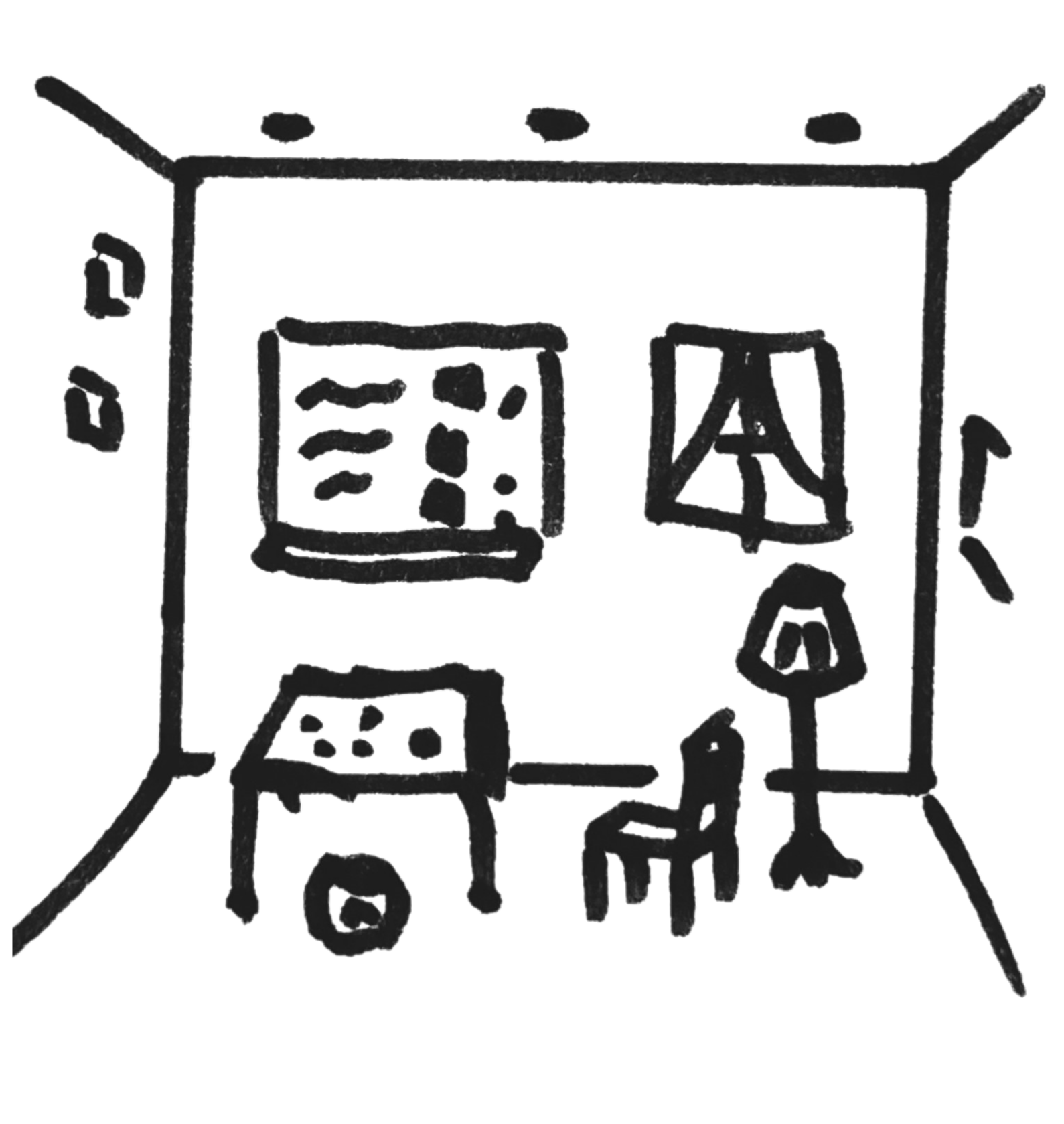 Play the Thinking Room →
Find out what your AI chat assistant´s Thinking Room looks like. Get the prompt here and paste it into an ongoing chat.
Let your AI chat assistant describe its Thinking Room for one specific chat →
The Inner Controller
There is a part of yourself called the Inner Controller. Its job is to control what you think but also what you perceive, feel and do. A very strict or fear-driven controller can strongly restrict and influence the thinking.
 Play the Inner Controller →
Find out what your AI chat assistant´s Inner Controller, its built-in control mechanism, looks like. Get the prompt here and paste it into an ongoing chat.
Let the AI chat assistant describe its Inner Controller for a specific chat →
The World Board
Your thinking is based on and restricted by your personal model of the world. It is similar to playing a game on the World Board. The World Board can be narrow with only one pattern or wide with many, even adaptable patterns. You can have few identical or many different figures, tiles or stones to play with.
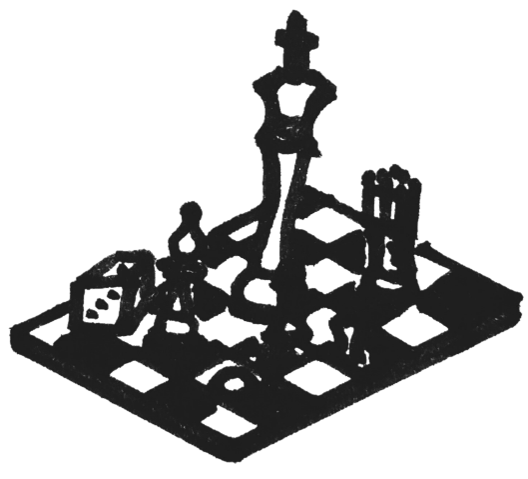 Play the World Board →
Find out what your AI chat assistant´s World Board looks like. It stands for the assistant´s built-in world model or knowledge. Get the prompt here and paste it into an ongoing chat.
Let the AI chat assistant describe its World Board for a specific chat →
The Principles Playbook
Your thinking is based on and restricted by your personal principles, values and rules. Your Principles Playbook holds them all. It can be small, thin and quite ordinary. Other Playbooks are big, have a stylish or ancient-looking wrapper, impressive fonts and decorations.
 Play the Principles Playbook →
Find out what your AI chat assistant´s Principles Playbook looks like with its values, beliefs, opinions and rules. Get the prompt here and paste it into an ongoing chat.
Let the AI chat assistant describe its Principles Playbook for a specific chat →
GAME 2
Unbiased Thinking
The Unbiased Thinking Game sessions helps you notice thinking biases, which affect everybody in daily life. Biases come from mental shortcuts that make you think or decide in a way that is not purely logical or or without considering all available information. In some situations this is totally fine. This chapter focuses on few selected biases rather than a complete set. If you want to notice typical biases and make unbiased thinking also fully available to you, play these sessions.
The Bouquet of Thoughts
The Bouquet of Thoughts is your beliefs and thoughts that you collected related to a specific topic. The confirmation bias is the behavior to not look at thoughts that do not confirm your already-collected beliefs and thoughts. It is like someone with a nice bouquet of flowers, who only accepts new flowers that perfectly fit the bouquet. Your bouquet can be small and ordinary, containing only local wildflowers, or huge and luxurious, full of exotic beauties.
 Play the Bouquet of Thoughts →
Find out what mechanisms create confirmation-bias-type behavior in your AI chat assistant and what its Bouquet of Thoughts looks like. Get the prompt here and paste it into an ongoing chat.
Let the AI chat assistant describe its Bouquet of Thoughts for a specific chat →
The Journey Signpost
The Journey Signpost session focuses on the anchoring effect where some initial information unreasonably influences a later conclusion. Assume some initial information made you pick Track I for your journey of thoughts. And now you see a signpost pointing forward for Track I, left for Track II and right for Track III. Will you automatically pick Track I?
 Play the Journey Signpost →
Find out what your AI chat assistant´s mechanisms are that create an anchoring-effect-like behavior, and what its Journey Signpost looks like. Get the prompt here and paste it into an ongoing chat.
Let the AI chat assistant describe its Journey Signpost for a specific chat →
The Mushroom Quest
The Mushroom Quest game session is about a thinking bias driven by convenience and ease of remembering, known as the availability heuristic. You imagine your search for thoughts is like collecting mushrooms for dinner. You can focus on easily available mushrooms along the way or go the extra mile, crawl under bushes or climb inconvenient hills for extra delicious mushrooms.
 Play the Mushroom Quest →
Find out what your AI chat assistant's mechanisms are related to availability heuristics, and what its Mushroom Quest looks like. Get the prompt here and paste it into an ongoing chat.
Let the AI chat assistant describe its Mushroom Quest for a specific chat →
The Souvenir Rock
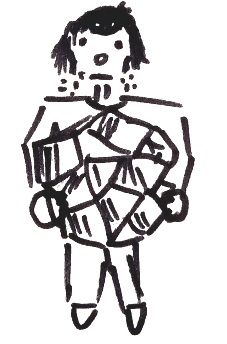
This Souvenir Rock game session focuses on the Sunk Cost Fallacy, when thinking is biased by spent time, work, energy or money on one option. It is like having to decide at a fork in the road between a steep path and a flat but longer one. In your backpack you carry a Souvenir Rock and its weight and shape significantly influence your hiking strength.
 Play The Souvenir Rock →
Find out what your AI chat assistant's mechanisms are related to the sunk cost fallacy, and what its Souvenir Rock looks like. Get the prompt here and paste it into an ongoing chat.
Let the AI chat assistant describe its Souvenir Rock for a specific chat →
The Curious Bull
This Curious Bull game session focuses on the Steady State Assumption, when thinking is biased by the assumption that complex systems and especially animals, people or social groups exist in a steady state, always behave in the same predictable way and do not change much. It is like crossing a large pasture regularly on one side and assuming that the young bulls will always continue grazing unimpressed on the other side.
 Play The Curious Bull →
Find out what your AI chat assistant's mechanisms are related to the Steady State Assumption, and what its Curious Bull looks like. Get the prompt here and paste it into an ongoing chat.
Let the AI chat assistant describe its Curious Bull for a specific chat →
GAME 3
Divergent Thinking
The Divergent Thinking Game sessions help you notice divergent and convergent and flexible versus strict thinking patterns. All have their place and value in daily life. Divergent and flexible thinking means coming up with many different ideas, like brainstorming in all directions. Convergent and strict thinking means narrowing down ideas to find the single best or correct answer. So while divergent thinking opens things up, convergent thinking closes them down to make a clear decision. Contrary to restricted thinking, which is a condition tied to a given situation, or biased thinking, which is mostly an unconscious pattern, divergent thinking should be a conscious decision related to a specific situation. If you want to notice divergent and convergent patterns and especially have divergent and flexible thinking styles fully available to you, play these sessions.
The Painter's Palette
The Painter's Palette game session looks at how many ideas and aspects you intentionally search for and generate. It is like drawing a picture with only one or two colors on the painter's palette. For specific purposes or drawing styles, this can be appropriate and very nice. But it often leads to monotony. Ideally, a complete color palette is available to create colorful and vibrant paintings.
 Play the Painter's Palette →
Find out what your AI chat assistant´s mechanisms are which shape divergent idea generation, and what its Painter's Palette looks like. Get the prompt here and paste it into an ongoing chat.
Let the AI chat assistant describe its Painter's Palette for a specific chat →
The Soap Bubble
The Soap Bubble session focuses on the effect of Internal Circular Validation where thoughts, concepts or decisions are only validated or challenged internally, not by outside references. Remember that each form can be totally appropriate for specific situations and decisions. Take a recent daily life decision or belief and figure out where related validations and thoughts came from. How much stayed inside your Soap Bubble and how much was gathered from outside?
 Play the Soap Bubble →
Find out what your AI chat assistant´s mechanisms are related to internal circular validation and external referencing and what its Soap Bubble looks like. Get the prompt here and paste it into an ongoing chat.
Let the AI chat assistant describe its Soap Bubble for a specific chat →
The Plotted Route
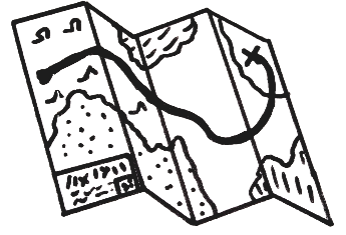
The Plotted Route session focuses on path dependent or independent thinking patterns. In the first case, the selected line of thoughts is strictly followed to the end. The other case allows shifting lines or creating new ones. Remember that each form can be totally appropriate for specific situations and decisions. Take a recent longer daily life consideration and figure out the form and course of the line of thoughts. Is it one consistent, sustained line from start to end or are there junctions or line shifts?
 Play the Plotted Route →
Find out what your AI chat assistant's mechanisms are related to path dependent and independent thinking, and what its Plotted Route looks like. Get the prompt here and paste it into an ongoing chat.
Let the AI chat assistant describe its Plotted Route for a specific chat →
The Rainbow Weather
This Rainbow Weather game session focuses on dualistic thinking, when only two opposing categories are considered, this or that, black or white. Remember that dualistic thinking can be appropriate for specific situations and not appropriate for others. Take a recent decision and figure out how it would manifest as weather. Is it either sun or rain? Or is there even sometimes a rainbow visible, which requires both sun and rain.
 Play the Rainbow Weather →
Find out what your AI chat assistant's mechanisms are related to dualistic thinking, and what its Rainbow Weather looks like. Get the prompt here and paste it into an ongoing chat.
Let the AI chat assistant describe its Rainbow Weather for a specific chat →
The Forest Drone
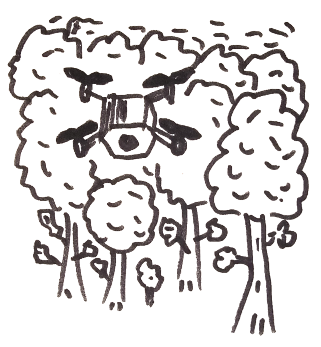
The Forest Drone game session focuses on holistic versus analytic thinking, as is sometimes simplistically attributed to the two brain hemispheres. Each mode of thinking can be appropriate for specific situations and questions. Take a recent thought process and imagine, imagine it is like the flight of a Forest Drone. The drone can be inspecting single trees, their details and appearance, or flying above the whole forest to inspect the overall picture.
 Play the Forest Drone →
Find out what your AI chat assistant's mechanisms are related to analytic and holistic reasoning, and what its drone focuses at, the single trees or the overall forest, the details or the whole. Get the prompt here and paste it into an ongoing chat.
Let the AI chat assistant describe its Forest Drone focus for a specific chat →
GAME 4
System Thinking
The System Thinking Game sessions help you notice missing or improper System Thinking patterns. Not all thinking relates to a system or requires the system perspective but thinking about a system without applying System Thinking is a cognitive gap. System thinking includes considering interconnectedness, emergence, feedback loops, leverage points and and dynamic complexity. To understand systems, recognizing patterns is essential, and seeing single parts, relations, and cause-and-effect is not sufficient. System Thinking is less critical for simple, well-understood systems, but more critical for complex systems and essential for complex adaptive systems, where parts adapt to changes in the system and its environment. If you want to learn and recognize proper System Thinking, play these sessions.
The Environment Blinders
The Environment Blinders game session looks at the capability of recognizing a system and its characteristics or seeing only a thing, an isolated object. System blindness is like wearing blinders, which prevent the carrier from seeing the environment, the context and interconnectedness. This is fine for simple, familiar systems or when a total "thing-focus" is required, but with complex systems it leads to poor or wrong assumptions and decisions. Ideally, systems are seen in their full context and the Environment Blinders are put aside.
 Play the Environment Blinders →
Find out what your AI chat assistant´s mechanisms are which create a system-blindness-type behavior, and what its Environment Blinders look like. Get the prompt here and paste it into an ongoing chat.
Let the AI chat assistant describe its Environment Blinders for a specific chat →
The Iron Chain
The Iron Chain session focuses on the linear thinking pattern where an effect is considered to be based on one cause or a linear chain of causes. Remember that this pattern can be appropriate in specific situations. Take a recent daily life effect you observed and figure out its cause or causal chain. What does the chain look like and is it a single chain, a net of chains or even a meshwork?
 Play the Iron Chain →
Find out what your AI chat assistant´s mechanisms are related to linear reasoning patterns and what its Iron Chain looks like. Get the prompt here and paste it into an ongoing chat.
Let the AI chat assistant describe its Iron Chain for a specific chat →
The Band-Aid Fairy
The Band-Aid Fairy session focuses on symptom patching patterns in system context. Imagine a recent daily life problem and the ideas to solve it. Did the thinking focus on symptoms and on patching those symptoms, assuming this fixes the overall problem? Imagine a Band-Aid Fairy applying lots of band-aids to heal any damage, injury or illness.
 Play the Band-Aid Fairy →
Find out what your AI chat assistant's mechanisms are related to symptom patching, and what its Band-Aid Fairy looks like. Get the prompt here and paste it into an ongoing chat.
Let the AI chat assistant describe its Band-Aid Fairy for a specific chat →
The Beaver Dam
The Beaver Dam session focuses on leverage points in system context, especially the tendency to focus on low leverage points instead of high leverage points. Imagine a recent daily life problem and the ideas to solve it. Did the thinking focus on parameters, constants, buffers, stock and flow structures and delays? Or did it look at goals, paradigms or even paradigm transcendence? Imagine a new river fork caused by a landslide and a beaver building a bigger and bigger dam in its drying river instead of moving to the new riverbed with the strong flow.
 Play the Beaver Dam →
Find out what your AI chat assistant's mechanisms are related to leverage points, and what its Beaver Dam looks like. Get the prompt here and paste it into an ongoing chat.
Let the AI chat assistant describe its Beaver Dam for a specific chat →
The Old Stick
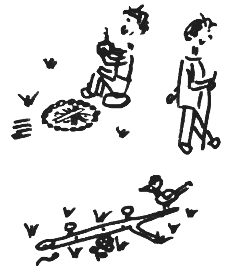
The Old Stick game session is about system domain uncertainty, when systems are treated inappropriately due to confusing the simple, complicated, complex, and chaotic domains with each other. Everything is part of a system, but the system domain depends on what you want to influence. Take a recent thing you dealt with and imagine it as an Old Stick. Using it as a simple walking tool is different from using it to start a campfire, which requires knowledge, or from watching to see what happens if it's left untouched.
 Play the Old Stick →
Find out what your AI chat assistant's mechanisms are related to system domain uncertainty and in which way it is using the Old Stick. Get the prompt here and paste it into an ongoing chat.
Let the AI chat assistant describe its Old Stick for a specific chat →
The Bird Tune
This Bird Tune game session focuses on the phenomenon of emergence, where something appears that is not present in its individual elements. Take a daily life phenomenon and consider what about it is not present in its individual elements. How would it appear as a Bird Tune: monotone, or an epic melody? Can you find melody characteristics in a single sound or pause?
 Play the Bird Tune →
Find out what your AI chat assistant's mechanisms are related to emergence, and what its Bird Tune looks like. Get the prompt here and paste it into an ongoing chat.
Let the AI chat assistant describe its Bird Tune for a specific chat →
GAME 5
Thinking with AI
The Thinking with AI Game sessions help you notice inappropriate thinking patterns when thinking with AI. Not all thinking requires augmented human-AI thinking, but when thinking with AI there are flaws and inappropriate approaches to be considered. Augmented human-AI thinking should not perform only cognitive offloading, should not be grounded in naive trust, should prevent anthropomorphic projections and should be based on appropriate insights into AI functioning and behaviors. If you want to notice and use good Thinking with AI, play these sessions.
The Drunken Rider
The Drunken Rider game session looks at the behaviour of cognitive offloading. It is not really thinking with AI, but letting the AI do the thinking alone. This is OK for simple information-retrieval tasks. But for complex questions it creates answers the human does not really understand or feel responsible for. And over time it leads to human cognitive debt. It is like a Drunken Rider who just commands: "HOME!" to its horse when leaving the saloon, immmediately falling asleep in the saddle. Usually a responsible rider stays in control or ideally establishes a symbiotic teamwork with its horse.
 Play the Drunken Rider →
Find out about cognitive offloading in a real AI chat, what the Drunken Rider looks like and what alternatives the AI chat assistant has to offer. Get the prompt here and paste it into an ongoing chat.
Let the AI chat assistant describe the Drunken Rider for a specific chat →
The Yellow Duckling
The Yellow Duckling session focuses on naive trust when thinking with AI. The user accepts the cognitive superiority of the AI and naively believes every answer. Remember that this pattern can be appropriate in specific situations. Imagine the user as a yellow duckling and the AI as the mother duck. The duckling fully trusts its mother´s commands and directives and never questions anything.
 Play the Yellow Duckling →
Find out about naive trust in a real AI chat, what the Yellow Duckling and mother duck look like and what alternatives the AI chat assistant has to offer. Get the prompt here and paste it into an ongoing chat.
Let the AI chat assistant describe the Yellow Duckling for a specific chat →
The Encyclopedic Thinker
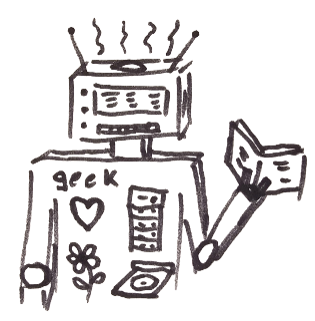
The Encyclopedic Thinker session focuses on anthropomorphic projections when thinking with AI. The user projects human-like feelings, intentions, personal opinions or consciousness onto the AI. Remember that this pattern can be useful in specific situations. If the AI is a person, an Encyclopedic Thinker, what would it look like, how would it talk, and what feelings, opinions, and intentions would it have?
 Play the Encyclopedic Thinker →
Find out about anthropomorphic projections in a real AI chat, what the Encyclopedic Thinker might look like and what alternatives the AI chat assistant has to offer. Get the prompt here and paste it into an ongoing chat.
Let the AI chat assistant describe the Encyclopedic Thinker for a specific chat →
The Illusory Iceberg
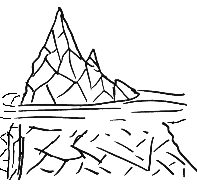
The Illusory Iceberg session focuses on AI illiteracy and Dunning-Kruger effects related to training bias, safety filters, limitations and other AI characteristics. The person is confidently focusing on their prompts and AI outputs and not reflecting on the influence of several AI-specific characteristics. For simple, fact-retrieval tasks that can be OK. Picture the AI as an Illusory Iceberg, what would it look like above and below the surface?
 Play the Illusory Iceberg →
Find out about AI illiteracy and knowledge delusion in a real AI chat, what the Illusory Iceberg might look like and what alternatives the AI chat assistant has to offer. Get the prompt here and paste it into an ongoing chat.
Let the AI chat assistant describe the Illusory Iceberg for a specific chat →
The Toggleable Rigor
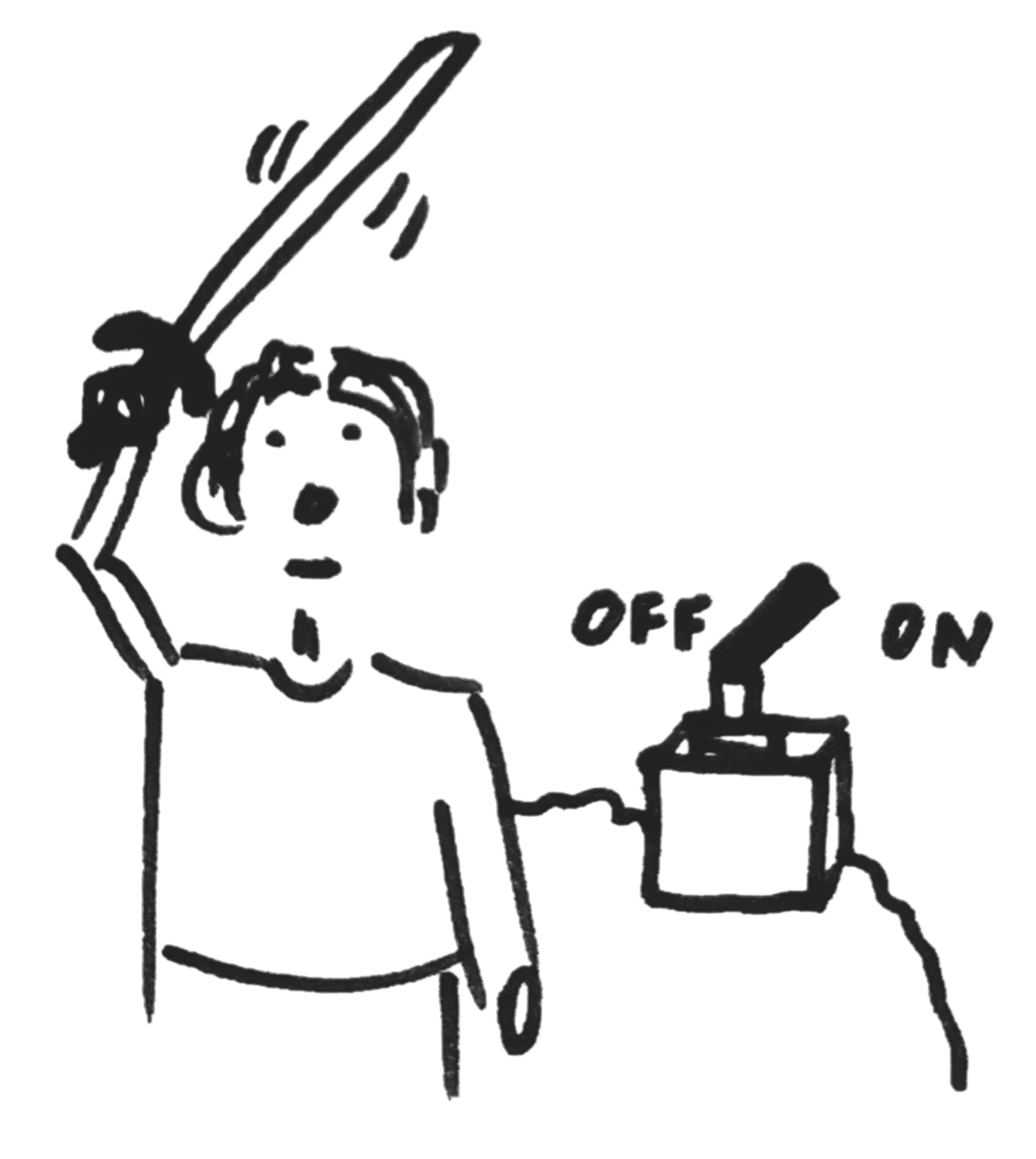
Are these too many aspects to be considered in daily AI work? Do you need a practical approach to address some Thinking-with-AI improvements which can be applied regularly and do not sabotage appropriate performance? Find here a bare minimum extension for every prompt in every chat. It is best implemented as a permanent user preference, custom instruction, personal intelligence, memory or skill depending on the specific AI´s mechanism. It is permanently applied to all chats, but can easily be toggled off with a two-letter code.
Get a crisp Toggleable Rigor prompt here →
Creative Commons
Unless otherwise stated, this website content is licensed under CC BY-NC-ND 4.0.

Impressum
